
The ongoing conflict between the United States, Iran, and Israel has rapidly escalated into one of the most dangerous geopolitical crises in recent years. What began as a targeted military operation has now evolved into a full-scale regional confrontation, drawing global attention and raising fears of wider instability across the Middle East.
The war officially began on February 28, 2026, when the United States and Israel launched coordinated airstrikes on multiple targets inside Iran, including military bases, nuclear facilities, and key leadership locations. These strikes marked a dramatic escalation after months of tension and failed negotiations over Iran’s nuclear program. In response, Iran launched a wave of missile and drone attacks targeting Israel, U.S. military bases, and allied countries across the region.
As the conflict intensified, reports of advanced aerial combat began to emerge. Claims circulating online and across some media channels suggest that Iranian defense systems may have successfully intercepted or shot down advanced U.S. aircraft, including fighter jets. While such claims—like the reported downing of an F-15—have generated massive attention, official confirmations remain limited, and information warfare has become a major part of the conflict. Both sides are actively using media and digital platforms to shape narratives and influence public perception.
The war is not only being fought in the skies and on the ground but also in cyberspace. Cyberwarfare operations have played a significant role, with coordinated attacks targeting communication systems, infrastructure, and even public information channels. These digital offensives are designed to disrupt enemy capabilities and create confusion, adding another layer of complexity to the conflict.
Meanwhile, the humanitarian and economic consequences are becoming increasingly severe. Airstrikes have damaged critical infrastructure, including oil facilities and urban centers, leading to casualties and mass displacement. Evacuations across the region have intensified as civilians and foreign nationals attempt to flee conflict zones. Airspace closures and security risks have disrupted travel and commerce, further deepening the crisis.
One of the most significant global impacts of the war has been on energy markets. Iran’s strategic position near the Strait of Hormuz—a vital route for global oil shipments—has made the conflict especially sensitive for the world economy. Disruptions in this region have already caused oil prices to surge and raised fears of long-term supply shortages. Experts warn that the economic fallout could rival past global energy crises if the situation continues to escalate.
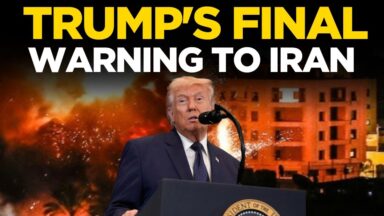
Political developments have added another layer of uncertainty. Donald Trump has indicated that the United States is exploring diplomatic options to end the conflict, even as military operations continue. In a recent statement, he announced a temporary delay in planned strikes to allow for negotiations, describing the talks as “productive.” However, Iranian officials have denied that direct negotiations are taking place, highlighting the deep mistrust between the two sides.
At the same time, Israel remains actively involved in the conflict, continuing its military operations against Iranian targets. The Israel-Iran dimension of the war has further complicated the situation, with missile exchanges and retaliatory strikes intensifying across multiple fronts. Civilians in affected areas face ongoing risks as sirens, air defense systems, and emergency responses become part of daily life.
The narrative that “Trump is losing the Iran war” has gained traction in some media and online discussions, largely due to the prolonged nature of the conflict and the lack of a clear resolution. However, the reality on the ground is far more complex. Military conflicts of this scale involve multiple objectives, shifting strategies, and unpredictable outcomes. While some analysts point to challenges faced by the U.S. and its allies, others emphasize that the situation remains fluid and far from decided.
Another critical factor is the risk of regional escalation. Countries across the Middle East, including Gulf states, have been affected either directly or indirectly by the conflict. Iranian strikes have targeted U.S. bases and allied infrastructure in several countries, raising concerns about a broader war that could involve multiple nations.
As the war continues, global leaders are calling for de-escalation and diplomatic solutions. International organizations and mediators are working to prevent further escalation and reduce the risk of a prolonged conflict. However, with both sides maintaining strong positions and ongoing military operations, achieving a ceasefire remains a significant challenge.
In conclusion, the US–Iran war represents a complex and evolving crisis with far-reaching consequences. From military confrontations and cyber warfare to economic disruption and humanitarian concerns, the conflict is shaping the global landscape in profound ways. As developments continue to unfold, the world watches closely, hoping for a resolution that can restore stability and prevent further loss of life.
⚠️ Disclaimer
This content is for informational and educational purposes only. It is based on publicly available reports and evolving news coverage. Some claims in fast-moving conflict situations may be unverified or subject to change. This content does not promote or support any side in the conflict.
Recent Comments